How to Research Salvia Divinorum Online: Botanical Identity, Product Information and Reliable Sources
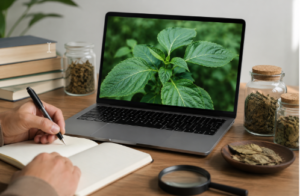
Search for Salvia divinorum online and you quickly discover that finding information is easy. Finding information that is clear, current, and actually useful is harder.
One page may describe the plant botanically. Another focuses on extracts. A third may discuss legal status without saying when the information was last updated. Product listings introduce terms such as cuttings, dried leaf, tincture, 10x, 40x, or 100x, often with little explanation for people seeing them for the first time.
Then there is another complication: searching simply for “Salvia” can bring up completely different species.
For newcomers, the challenge is not a lack of information. It is learning how to sort that information.
A better approach starts with a few basic questions:
What plant is actually being discussed?
What form of the plant is the page describing?
Is the information educational, commercial, or both?
Can the important claims be checked elsewhere?
Is the information current enough to rely on?
Once those questions become part of your research process, Salvia divinorum becomes much easier to understand.
Table of Contents
- Start With the Full Botanical Name
- Why Searching for “Salvia” Can Be Misleading
- Separate Botanical Information From Product Information
- Learn the Main Product Terms Before Comparing Listings
- Plant vs Cutting: Why the Difference Matters
- Dried Leaf, Powder and Extract Are Not Interchangeable
- Understand What Extract Labels Do—and Do Not—Tell You
- Read Product Pages for Facts, Not Adjectives
- Look for Information That Can Be Cross-Checked
- Why Source Transparency Matters
- Be Careful With Old Legal Information
- How to Recognize Weak or Misleading Pages
- Using Search Engines More Effectively
- Using AI Tools Without Treating Them as the Final Authority
- A Practical Research Checklist
- Frequently Asked Questions
- Final Thoughts
Start With the Full Botanical Name
The most useful place to begin is also the simplest:
Salvia divinorum.
Using the complete botanical name immediately narrows the subject.
Salvia is a very large genus in the mint family, Lamiaceae. It contains many familiar plants, including culinary sages and numerous ornamental species.
That means a search for:
Salvia plant
is not particularly precise.
You may get results about garden sage, decorative flowering salvias, medicinal herbs, nursery plants, or Salvia divinorum.
By contrast:
Salvia divinorum plant
tells the search engine exactly which species you want.
This matters even more when reading commercial pages. A useful listing should identify the species clearly rather than expecting the reader to assume that the word “Salvia” always means Salvia divinorum.
Correct botanical naming is not an unnecessary technical detail. It is the foundation of accurate research.
Why Searching for “Salvia” Can Be Misleading
Imagine searching for “sage cuttings.”
You could easily end up reading propagation advice for an entirely different Salvia species.
Some of the general horticultural principles might still be useful, but you would no longer be researching the exact plant you intended to learn about.
The same problem appears with product searches.
Terms such as:
- Salvia leaves
- Salvia plant
- sage extract
- Salvia seeds
can produce mixed results.
Whenever accuracy matters, add divinorum.
For even more precise searches, combine the botanical name with the exact question:
Salvia divinorum botanical description
Salvia divinorum cutting vs plant
Salvia divinorum extract terminology
Salvia divinorum legal status [location]
The more specific the question, the less time you spend separating unrelated results from useful ones.
Separate Botanical Information From Product Information
One of the easiest ways to become confused online is to mix two different types of information.
Botanical information
This explains the species itself:
- taxonomy;
- native range;
- morphology;
- leaves;
- stems;
- flowering;
- propagation;
- and plant biology.
Product information
This explains a particular commercial form:
- living plant;
- cutting;
- dried leaf;
- powder;
- tincture;
- extract;
- quantity;
- packaging;
- and price.
Both types of information can be useful.
They simply answer different questions.
If you want to know how Salvia divinorum is identified botanically, an academic, botanical, or horticultural source is usually more useful than a product page.
If you want to know whether a seller is offering one rooted plant or five cuttings, the product page is the relevant source.
Strong research comes from knowing which source should answer which question.
Learn the Main Product Terms Before Comparing Listings
A newcomer can easily look at four Salvia divinorum listings and assume they are variations of the same product.
They may not be.
Common terms include:
Living plant
A developed, living specimen.
Cutting
Vegetative plant material intended to continue growing as a new plant.
Dried leaf
Leaves that have been harvested and dried.
Powder
Finely ground botanical material; the term alone does not automatically indicate concentration.
Tincture
A liquid botanical preparation.
Extract
A concentrated preparation created through additional processing.
Before comparing prices, first make sure you are comparing the same category.
A cutting and an established plant are not equivalent.
A gram of plain dried leaf and a gram of concentrated extract are not equivalent.
A bottle of tincture cannot be compared meaningfully with dried material by weight alone.
Understanding the category comes before comparing the number beside the dollar sign.
Plant vs Cutting: Why the Difference Matters
This distinction causes a surprising amount of confusion.
A cutting is plant material taken from a parent plant for vegetative propagation.
An established plant has developed farther, with a more independent root system and more mature above-ground growth.
A seller should make this distinction obvious.
If a listing says “plant,” the reader should not have to study photographs for ten minutes to determine whether the product is actually an unrooted stem cutting.
Likewise, someone specifically looking for propagation material may prefer a cutting rather than paying for a larger established plant.
Good terminology prevents mismatched expectations.
Dried Leaf, Powder and Extract Are Not Interchangeable
These three terms describe different things.
Dried leaf
The material remains relatively close to its original physical form.
Powder
The material has been ground into smaller particles.
That alone does not necessarily mean it is more concentrated.
Extract
Additional processing has been used to create a concentrated preparation.
This distinction is especially important because a vague listing may simply use the word “powder” without explaining whether it represents plain ground leaf or a concentrated preparation.
The most useful product descriptions leave no ambiguity.
They tell you what the material is rather than relying on a product name that assumes prior knowledge.
Understand What Extract Labels Do—and Do Not—Tell You
Another term newcomers encounter quickly is the multiplier system:
5x
10x
20x
40x
100x
At first glance, the numbers appear self-explanatory.
In reality, they require context.
These labels are generally used to organize extracts into stated concentration tiers. They are useful for distinguishing products within a seller’s range.
However, the multiplier alone is not a complete description of the product.
Readers should still ask:
- What botanical material was used?
- What physical form is the finished product?
- How much is supplied?
- How does the seller define the extract tier?
- Is the number being presented as a product ratio or a laboratory measurement?
Large numbers naturally draw attention.
Good information should draw more.
Read Product Pages for Facts, Not Adjectives
One of the best habits when evaluating an online listing is to mentally remove the promotional words.
Ignore:
premium
strongest
exceptional
rare
superior
authentic
Then see what information remains.
A useful page should still tell you:
- the species;
- the product form;
- the quantity;
- the concentration tier where relevant;
- how the product is presented;
- shipping information;
- and what the buyer should expect to receive.
This approach works particularly well when researching salvia divinorum for sale because commercial search results can contain plants, cuttings, leaves, powders, tinctures, and multiple extract strengths on the same website.
The more forms a seller carries, the more important clear categorization becomes.
A buyer should be able to understand the difference between products without depending on marketing adjectives.
Look for Information That Can Be Cross-Checked
A trustworthy-looking website can still contain inaccurate information.
Appearance is not evidence.
When a claim matters, try to verify it independently.
For botanical questions, useful cross-checking sources may include:
- recognized botanical databases;
- herbarium resources;
- peer-reviewed papers;
- university publications;
- established horticultural references.
For legal questions, prioritize:
- current legislation;
- government websites;
- official state or national resources.
For product-specific questions, the seller’s own page may be the primary source—but remember that it describes that seller’s product, not necessarily every product carrying a similar name elsewhere.
Cross-checking is especially important when one page makes an unusually absolute claim.
If every reliable source says one thing and one anonymous blog says the opposite, that difference deserves investigation.
Why Source Transparency Matters
Transparency does not mean a website has to publish every detail about its business.
It means the information needed to understand the content should not be unnecessarily hidden.
For educational content, useful transparency includes:
- clear authorship where appropriate;
- publication or update dates;
- specific terminology;
- sources for factual claims;
- and distinguishing fact from opinion.
For commercial pages, look for:
- identifiable product categories;
- clear quantities;
- product descriptions;
- photographs;
- shipping policies;
- contact options;
- and information about how orders work.
A website should make basic questions easier to answer, not harder.
If every important detail requires a private message, the page itself is not doing enough work.
Be Careful With Old Legal Information
Legal information deserves its own section because this is where outdated articles can cause real confusion.
The legal treatment of Salvia divinorum varies by jurisdiction.
A statement written years ago may have been accurate when published but no longer reflect current rules.
Before relying on an article about legality, check:
When was it published?
Has it been updated?
Which country or state is it discussing?
Does it reference an official source?
Avoid treating statements such as:
Salvia is legal.
or:
Salvia is illegal.
as complete answers.
The obvious next question is:
Where?
Legal research should always include a location and a current date.
How to Recognize Weak or Misleading Pages
No single feature automatically proves that a page is unreliable.
However, certain patterns should make you slow down.
The page never identifies the species properly
If an article discusses Salvia divinorum but repeatedly calls it only “sage” or “Salvia,” important context may be missing.
Claims are dramatic but unsourced
Extraordinary claims deserve stronger evidence, not stronger adjectives.
The article mixes different species together
This can happen when content is assembled from loosely related search results.
Product descriptions contradict photographs
If the title says “living plant” but every photo shows dried material, investigate before assuming which part is correct.
The page has no date but discusses laws
Legal information without a timeframe is difficult to evaluate.
Every paragraph exists only to sell something
Commercial pages can still educate readers. If useful information disappears entirely once promotional language is removed, the page provides little independent value.
The same vague text appears across multiple products
A 5x extract, rooted plant, cutting, and tincture should not all have effectively identical descriptions.
Specific products deserve specific information.
Using Search Engines More Effectively
Search quality improves dramatically when you stop asking broad questions.
Instead of:
What is Salvia?
try:
What is Salvia divinorum botanical species?
Instead of:
Salvia plants
try:
Salvia divinorum living plant vs cutting
Instead of:
Is Salvia legal?
try:
Salvia divinorum legal status California 2026
Instead of:
Salvia extract
try:
Salvia divinorum 10x 20x extract labels meaning
Quotation marks can also help when you need an exact phrase.
Adding a trusted domain can narrow results further:
Salvia divinorum site:edu
or searching within a botanical database directly can reduce the noise.
Good search technique is less about knowing special tricks and more about turning a vague topic into a specific question.
Using AI Tools Without Treating Them as the Final Authority
AI-assisted search has made researching unfamiliar subjects faster.
It can summarize terminology, compare concepts, suggest follow-up questions, and help explain technical language.
That is genuinely useful.
But an AI answer should still be treated as a starting point when accuracy matters.
Ask:
What source supports this claim?
Is the information current?
Is this a botanical fact, legal fact, seller-specific detail, or interpretation?
Can I verify the important part elsewhere?
This matters particularly for legal information and uncommon botanical species, where an AI system may encounter conflicting or outdated pages.
A productive workflow is:
- Use AI or search to understand the basic terminology.
- Identify the important factual claims.
- Open the underlying sources.
- Check whether the information applies to your exact question.
- Prefer current primary or authoritative sources when available.
AI can shorten the path to good information.
It should not eliminate verification.
Why Clear Structure Helps Both Readers and Search Systems
Good online information should be easy to navigate.
Clear headings do more than make an article look organized.
They help readers jump directly to the question they care about.
Someone interested in plants can find the plant section.
Someone confused about extracts can find the extract section.
Someone researching legality can find the legal discussion without reading the entire page.
This clarity also helps search engines and AI systems understand relationships between concepts.
For example:
Salvia divinorum → species
Salvia divinorum cutting → vegetative propagation material
Salvia divinorum plant → living specimen
Salvia divinorum extract → concentrated botanical preparation
When content defines entities and relationships clearly, it becomes easier to interpret than pages that repeatedly use vague words such as “product,” “thing,” “herb,” or “item.”
Good writing for machines usually begins with good writing for humans.
A Practical Research Checklist
Before accepting information about Salvia divinorum, ask these questions.
1. Does the page identify the full species?
Look for Salvia divinorum.
2. What kind of information is this?
Botanical, legal, historical, commercial, or opinion?
3. Is the page current enough for the question?
Especially important for law and product availability.
4. Are important claims supported?
Can you trace them to a credible source?
5. Does the product form make sense?
Plant, cutting, leaf, powder, tincture, or extract?
6. Is quantity clearly stated?
Avoid comparing prices without understanding what each price includes.
7. Are extract terms explained?
A multiplier should have context.
8. Do photographs match the description?
Images should reduce uncertainty.
9. Does the seller explain ordering and shipping?
Basic fulfillment information should be accessible.
10. Have you verified local legal requirements?
Never infer legality simply because a website accepts an order.
This checklist turns a large amount of scattered information into a manageable research process.
Frequently Asked Questions
Is Salvia divinorum the same as ordinary sage?
No. It belongs to the Salvia genus but is a distinct species. Using the complete botanical name helps avoid confusing it with culinary or ornamental sages.
Why do some websites sell plants while others sell extracts?
They are different product forms derived from or associated with the same botanical species. A live plant, cutting, dried leaf, tincture, and extract serve different categories and should be described separately.
Is a cutting the same as an established plant?
No. A cutting is vegetative propagation material. An established plant has developed farther in its independent growth.
Does “powder” mean extract?
Not automatically. Powder describes a physical form. Always check whether the listing says plain powdered leaf or a concentrated preparation.
What do 10x and 20x mean?
They are multiplier-style labels commonly used to distinguish extract tiers. The number should be interpreted in the context provided by the producer or seller rather than assumed to be a universal laboratory measurement.
Can I trust the first legal article I find?
You should verify the date, jurisdiction, and source. Laws change, and a rule applying in one location may not apply elsewhere.
Are AI answers reliable for Salvia research?
They can be useful for orientation and explaining terminology, but important botanical, legal, or product claims should still be verified with appropriate sources.
What makes an online product description useful?
Specificity. The reader should understand the species, product form, quantity, labeling, and basic ordering information without having to guess.
Final Thoughts
Researching Salvia divinorum online becomes much easier when you stop treating every search result as though it answers the same question.
Start by identifying the species correctly.
Then decide whether you are researching the living plant, propagation material, dried botanical material, tinctures, extracts, legal status, or commercial availability.
Choose sources that match the question.
Cross-check important claims.
Look at dates when information can change.
And when reading product pages, focus on measurable or understandable facts rather than promotional language.
For people encountering Salvia divinorum for the first time, the internet can initially make the subject look more complicated than it needs to be.
Good research does the opposite.
It separates the plant from the product, the product from the marketing, current information from outdated information, and verifiable facts from unsupported claims.
Once those distinctions are clear, the subject becomes far easier to navigate—and far more interesting to understand.